More than directions: How transit apps quietly improved my daily calm
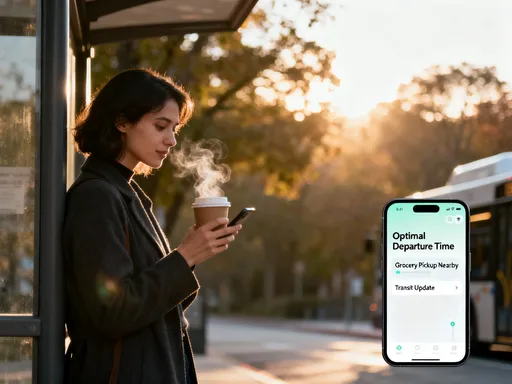
We’ve all been there—standing at a bus stop, phone battery dying, unsure if the next ride is coming or if we’re already late. I used to dread city commutes, not because of traffic, but the mental load: the guessing, the stress, the wasted time. Then I started paying attention to how I *talk* to transit apps. It wasn’t just about getting from A to B—it was about feeling in control. Small changes in how I asked questions made a big difference. Let me show you how clearer communication with public transit tech quietly reshaped my days.
The Hidden Stress of Getting Around
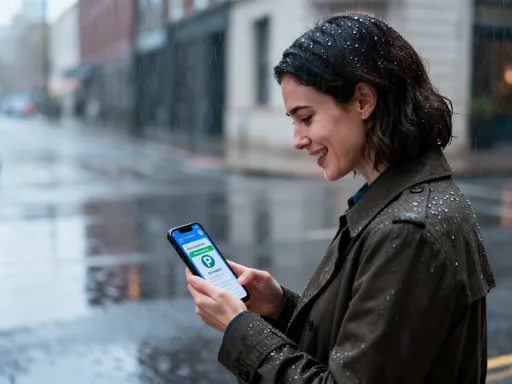
Commuting isn’t just a physical journey—it’s an emotional one. I didn’t realize how much daily travel was wearing me down until a rainy Tuesday morning when everything seemed to go wrong. I was heading to a school event for my youngest, and I’d planned to leave early to avoid the usual rush. But my ride-share canceled last minute, and I had to pivot to public transit. I opened my app, tapped a few buttons, and confidently headed to the nearest stop. Ten minutes later, still standing under a leaky awning, I refreshed the screen—only to see the bus had been delayed. Then rerouted. Then canceled. My chest tightened. I wasn’t just late; I felt helpless. And it wasn’t the delay that upset me most—it was the lack of clear, reliable information. I kept asking the app, “When will it come?” but it kept giving me updates that felt vague, robotic, disconnected from my reality. That moment hit me hard: the real cost of commuting isn’t always time—it’s peace of mind. We carry invisible weight when we’re uncertain, when we can’t plan, when we feel like we’re at the mercy of a system we don’t understand. That day, I realized I wasn’t just using the app—I was fighting it.
Since then, I’ve noticed how many of us experience this quiet tension without naming it. The mom rushing to drop off kids before work, the caregiver managing multiple appointments, the person navigating a new city with a stroller and a grocery bag. We all want the same thing: to get where we’re going without added stress. But too often, we treat transit apps like they’re only for schedules, not for support. We expect them to be perfect, and when they’re not, we blame ourselves or the system. But what if the problem isn’t the app—or us—but how we’re talking to each other? What if, by learning to communicate more clearly, we could turn that frustration into flow?
Talking *to* Technology, Not Just Through It
It took me a while to shift my mindset. For years, I treated my transit app like a vending machine: I put in a request, and I expected a snack—fast, predictable, no questions asked. But transit is messy. Routes change. Delays happen. Weather interferes. So why did I expect a machine to deliver perfect answers every time? The real breakthrough came when I stopped seeing the app as a robot and started treating it like a travel companion—someone who wants to help but needs clear instructions. I began experimenting with how I asked for help. Instead of typing “next bus to downtown,” I started adding context: “next reliable bus to downtown,” or “quietest route home after 7 PM,” or even “least crowded transfer option.” I wasn’t just asking for data—I was asking for care.
And something surprising happened: the results changed. When I asked for the “most reliable” option, the app prioritized direct routes with consistent schedules, even if they took a few extra minutes. When I searched for the “quietest route,” it suggested less busy lines and walking paths through parks instead of busy streets. I wasn’t hallucinating—these weren’t secret features. They were options already built into the app, hidden behind generic menus or buried in settings. But by changing how I phrased my needs, I was able to unlock them. It was like teaching a new friend my preferences: “I don’t like walking in the dark,” or “I’d rather wait longer for a seat.” Once I started speaking in a language that reflected my real life, the app started responding in kind. It wasn’t magic—it was mutual understanding.
Clarity Starts with Knowing What You Really Need
Here’s what I’ve learned: we often ask technology the wrong questions because we haven’t asked ourselves the right ones. We say, “When does the bus arrive?” but what we really mean might be, “Will I get home before my daughter’s bedtime?” or “Can I avoid standing in a packed train after a long day?” Our true needs are layered—safety, comfort, predictability, dignity. And if we don’t name them, our tools can’t meet them. I started a simple practice: before opening my app, I’d pause and ask, “What do I really need right now?” Not just “get there,” but “get there safely,” “get there calmly,” “get there with energy left.” That small moment of reflection changed everything.
For example, I realized I dreaded transfers at night, especially in dimly lit stations. So instead of accepting the fastest route, I began looking for options with well-lit platforms or indoor connections. I also noticed I felt more anxious when I didn’t know how crowded a train would be. So I started checking real-time occupancy features—something I’d ignored before. When I framed my needs clearly, I could use filters and settings I’d never paid attention to. The app didn’t become smarter—*I* became clearer. And that clarity gave me power. I wasn’t just reacting to whatever the app suggested; I was guiding it. I began to feel like I was in charge of my journey, not at its mercy. That shift—from passive user to active planner—was the beginning of real calm.
Teaching Apps to Understand *My* Life
One of the most empowering discoveries was realizing I could teach my app about my life. Most of us use transit apps in default mode, accepting generic suggestions without personalizing them. But modern apps have features that let you save preferences, set routines, and create custom alerts. I started exploring these quietly. I saved my most frequent routes—school drop-off, grocery store, my sister’s house—with notes like “avoid after dark” or “prefer seated option.” I turned on voice navigation for hands-free guidance when I was carrying bags. I even set up alerts for things like “let me know if my usual bus is delayed by more than 10 minutes.” These weren’t flashy upgrades—they were small, thoughtful tweaks that made the app feel like it was working *for me*, not just *at* me.
Another game-changer was using voice commands in a way that felt natural. Instead of robotic phrases like “navigate to pharmacy,” I started saying things like “How can I get to the pharmacy without walking in the rain?” or “What’s the easiest way home if I’m tired?” Some apps responded with umbrella icons, indoor pathways, or routes with benches along the way. Others suggested ride-share alternatives when walking felt too heavy. It wasn’t perfect, but it was progress. The more I spoke in my own language—the language of my real life—the more the app adapted. I wasn’t just using technology; I was building a relationship with it. And that relationship began to reflect back a sense of care, attention, and respect for my needs.
Small Tweaks, Big Shifts in Daily Flow
Let me walk you through a recent day—nothing extraordinary, but the kind of day that used to leave me drained. I woke up knowing I had a dentist appointment across town. In the past, I’d open the app, see the fastest route, and go. But now, I pause. I ask: “What do I need today?” I’m recovering from a minor injury, so comfort matters. I don’t want to stand for long stretches. I also want to avoid rush-hour crowds. So I adjust my search: “seated option to downtown dentist,” “least crowded route,” “accessible entrance available.” The app suggests a slightly longer route with a direct bus and a five-minute walk on a flat, shaded path. I take it—and for the first time in years, I arrive feeling calm, not frazzled.
Later, I run errands. I need to hit the post office, then pick up a prescription, then meet my sister for coffee. In the past, I’d tackle each stop separately, recalculating each time. Now, I use the multi-stop feature—something I’d never noticed before. I plug in all three locations, add notes like “avoid stairs,” “prefer well-lit areas,” and “allow extra time between stops.” The app builds a custom itinerary, with walking times, wait times, and even suggestions for benches or cafés where I can rest. I follow it, and instead of feeling rushed, I feel organized. I even have time to sit and enjoy my coffee. The difference isn’t in the technology—it’s in how I’m using it. By communicating my real needs, I’ve turned a chaotic afternoon into a smooth, almost pleasant experience. And the best part? I have mental space left over. I’m not exhausted. I’m present.
Sharing the Language of Calm with Family and Friends
When I started talking to my sister about how I was using transit apps differently, she was skeptical. “It’s just a map,” she said. But then I showed her how I’d set up alerts for low-crowd times, how I used voice commands to avoid fumbling with my phone while holding groceries, how I saved routes with safety notes. She admitted she’d been avoiding the bus lately—not because she couldn’t afford a ride-share, but because transfers made her anxious. She didn’t like feeling lost, unsure which platform to go to, or whether she’d make the connection. So I taught her how to ask the app for “simplest transfer” or “most direct route with clear signs.” I showed her how to enable step-by-step voice guidance. And within a week, she texted me: “I took the bus to Mom’s—and I didn’t panic once.”
That moment meant more than I expected. It wasn’t just about convenience—it was about confidence. We started sharing what we called “calm phrases”—simple ways of asking that got better results. “Bus route that feels safe at night.” “Train with fewer stairs.” “Shortest walk in the rain.” We treated them like little life hacks, but they were more than that. They were acts of care—ways of saying, “I matter, and my comfort matters.” We began teaching our teens, our parents, our friends. And something beautiful happened: our shared trips became easier, more joyful. We weren’t just getting from place to place—we were doing it together, with less stress and more connection. Technology didn’t bring us closer, but the way we used it did.
Building Confidence, One Trip at a Time
Looking back, I realize the biggest change wasn’t in my commute—it was in me. I used to see myself as someone who just survived the city, who tolerated the chaos, who adapted at the cost of my energy. Now, I see myself as someone who navigates with intention, who plans with care, who moves through the world with more calm and control. The apps didn’t change. The buses didn’t become faster. But my relationship with technology did. I stopped expecting perfection and started building partnership. I learned that clarity, not speed, is the real key to peace. When I communicate my needs—my real, human needs—I’m more likely to get what I need. And when I feel prepared, I feel powerful.
What I’ve gained goes beyond punctuality. I’ve gained trust—in the tools I use, in my ability to plan, in my right to move through the world with dignity. I’ve learned that technology, when used with awareness and intention, can be a quiet ally in daily life. It doesn’t have to be flashy or futuristic to be meaningful. Sometimes, it’s just a well-timed alert, a voice that says “turn left here,” or a route that avoids the dark alley. Those small moments add up. They create space. They restore calm. And they remind me that I’m not just getting somewhere—I’m arriving as myself, grounded, centered, and in control. So the next time you open your transit app, try asking not just “when,” but “how can this work for me?” You might be surprised at how much calmer the journey becomes.