More Than Just Bookmarks: How Reading Apps Quietly Transformed My Focus and Mood
You know that feeling when you’re trying to read, but your mind keeps drifting—work worries, unanswered texts, tomorrow’s to-do list? I used to love reading, but it felt like I couldn’t finish a single chapter without getting distracted. Then I started using a simple reading app not just to track books, but to actually create space in my day. It wasn’t about finishing more books. It was about feeling calmer, more present, and surprisingly, more like myself. That small shift changed not just my reading habits, but how I move through my days—slower, softer, and with more intention.
The Overwhelm Before the App: When Reading Felt Like Another Task
There was a time when picking up a book felt less like a pleasure and more like a chore. I’d sit on the couch after the kids were in bed, a novel in hand, and within minutes my thoughts would spiral. Did I pack lunch for tomorrow? Should I reply to that email now? What if I’m falling behind? The story on the page blurred into background noise, drowned out by the constant hum of mental to-do lists. I wasn’t reading—I was performing the act of reading, hoping that somehow, just by holding a book, I’d absorb wisdom or peace. But it didn’t work. I’d close the book frustrated, sometimes not even remembering what I’d just read.
My Kindle was a graveyard of abandoned titles. Half-finished memoirs, philosophy books I thought would make me smarter, novels recommended by friends—I’d start them with enthusiasm, only to lose interest or focus after a few chapters. And the physical books? They stacked up on my nightstand like silent judges, whispering, You said you’d read this. You said this time would be different. The guilt built slowly, turning something that used to bring me joy into another source of pressure. I didn’t realize how much emotional weight I was carrying until I stepped back and asked: Why do I even want to read in the first place?
That question led me to understand that my problem wasn’t with reading—it was with how I was approaching it. I had turned it into a performance, a metric to measure myself against. Finish a book a month? Check. Read the latest bestseller? Check. But none of it felt satisfying. I wasn’t connecting with the words. I wasn’t feeling anything. And that’s when I realized: I didn’t need more books. I needed a different relationship with reading—one that wasn’t about productivity, but presence.
Finding the Right App: Simplicity Over Features
I started looking for tools that could help, but most reading apps felt like they were built for data lovers, not for someone like me who just wanted to enjoy a story. One app promised detailed analytics—pages per hour, reading speed trends, monthly goals. Another had a social feed where you could see what your friends were reading, like a book-themed Instagram. But none of them spoke to what I actually needed: a way to reconnect with the quiet joy of reading, not turn it into another competition.
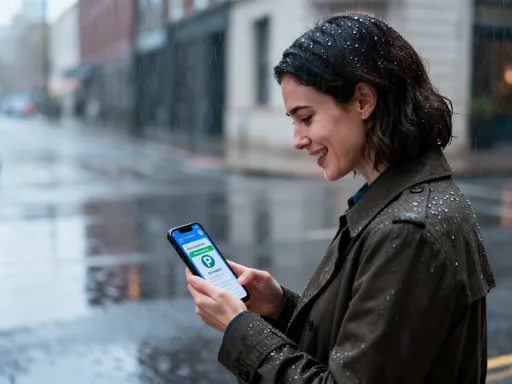
Then I found one that stood out. It didn’t have flashy dashboards or leaderboards. Instead, when I opened it, it asked just two questions: What are you reading? and How did it make you feel? That second question stopped me in my tracks. No app had ever asked me that before. It wasn’t interested in how fast I read or how many books I finished. It cared about my experience. I paused, thought for a moment, and typed: “Peaceful. Like I could breathe again.” That simple act—naming how a few pages made me feel—changed everything.
Suddenly, reading wasn’t about checking off a box. It was about tuning in. I started choosing books based on how I wanted to feel, not what I thought I should read. If I was anxious, I’d pick something gentle and lyrical. If I felt stuck in a rut, I’d reach for something inspiring. The app didn’t push me toward any particular genre or author. It just held space for my choices, reflecting them back with kindness. It wasn’t a coach. It was a companion. And for the first time in years, I felt excited to open a book—not because I had to, but because I wanted to.
Building a Personal Reading Ritual: Morning Coffee and Five Minutes
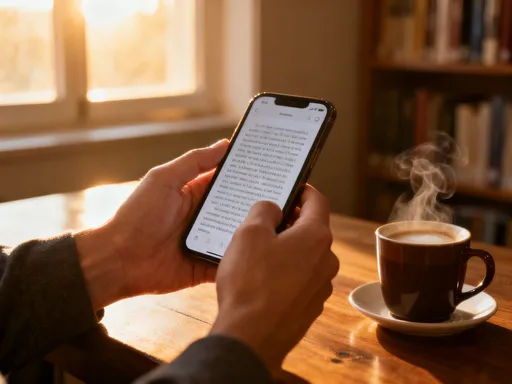
I didn’t start big. I knew if I aimed for an hour a day, I’d burn out fast. Instead, I committed to just five minutes. Every morning, after I poured my coffee and before I checked my phone, I opened my book and the app. I’d read a few pages, then log the moment—not with pressure, but with curiosity. What did I notice? How did I feel? Sometimes I wrote just one word: calm, curious, hopeful. Other times, a sentence: “This character feels like someone I know.”
What surprised me was how those five minutes began to expand. Because the app didn’t nag me with reminders that felt like demands—no red badges, no guilt-tripping messages—it felt safe to return. It greeted me like an old friend: “Welcome back. Ready to read a little more?” There was no judgment for the days I missed. Just a quiet invitation to begin again. And slowly, those five minutes turned into ten, then twenty. I wasn’t forcing myself to read. I was allowing myself to enjoy it.
The ritual became sacred. Phone face down. Kids still asleep. Just me, my coffee, and a few pages of a story. The app didn’t replace the experience—it enhanced it. By marking the moment, it helped me honor it. I started looking forward to that time, not as another task, but as a gift. And the more I protected that space, the more my focus deepened. I noticed details in the writing I would’ve skimmed before. I felt the rhythm of sentences. I began to savor words, not rush through them.
Seeing Patterns: What My Reading Says About My Inner Life
After a few weeks, the app showed me a simple timeline of what I’d read and how I’d felt. At first, I thought it was just a nice feature. But then I started to see patterns. During a stressful week at work, I’d reached for novels—especially ones with strong, resilient characters. When I felt emotionally drained, I avoided heavy nonfiction and instead picked up poetry or short stories, something light and lyrical. One month, I realized I hadn’t read a single book just for fun. Every choice had been practical—how to organize, how to parent, how to be more productive. Seeing that made me pause.
It wasn’t that those books weren’t valuable. But I had forgotten to feed my soul. The app didn’t scold me. It simply reflected what was already true. And that reflection gave me permission to shift. The next week, I picked up a whimsical novel I’d been avoiding because it “wasn’t serious enough.” Within pages, I laughed out loud. I felt lighter. I remembered what joy felt like on the page.
This was the real gift: the app helped me use reading as emotional self-care. Instead of asking, What should I read? I started asking, What do I need right now? Am I seeking comfort? Clarity? Escape? Inspiration? The answer guided my choice. And over time, I became more attuned to my inner world. I noticed when I was avoiding difficult emotions by choosing only light reads. I noticed when I was using self-help books to avoid just being still. The app didn’t fix these patterns—but it made them visible. And awareness, I’ve learned, is the first step toward change.
The Unexpected Benefit: Better Sleep and Less Screen Anxiety
One of the most surprising changes happened at night. For years, my bedtime routine had been the same: scroll through social media, check emails, maybe watch a show. I’d lie in bed with my mind racing, tired but unable to shut off. I knew screens were the problem, but I didn’t know how to stop. Then I decided to swap 15 minutes of scrolling for 15 minutes of reading—tracked in the app.
The first few nights were hard. My fingers itched for the familiar swipe. But the app made the transition easier. Its night mode used warm, soft lighting—no harsh blues or whites. No notifications popped up. No messages pulled me away. It was just me and the story. And something shifted. I wasn’t reading to escape reality—I was reading to return to myself.
Within a week, I noticed I was falling asleep faster. My thoughts weren’t spinning as much. I felt calmer, more grounded. The app didn’t have a sleep tracker or fancy algorithms—it just created a container for a gentler ending to the day. Instead of ending on a wave of other people’s lives, curated and polished, I ended on a quiet moment of my own. I wasn’t comparing, reacting, or reacting to drama. I was simply present with a story, and that presence spilled over into my rest.
Now, when I feel that late-night urge to scroll, I hear the app’s quiet invitation: “Want to read a little before bed?” And more often than not, I say yes. Not because I have to, but because it feels kinder. It feels like taking care of myself.
Real-Life Application: Sharing Quiet Moments Without Pressure
One of the loveliest side effects has been how I now talk about what I read. Before, I’d feel pressure to have a deep analysis or a clever take—especially if it was a “serious” book. Now, I share differently. At lunch with a friend, I mentioned a line from a novel that had stayed with me: “She carried her sadness like a coat she couldn’t take off.” I didn’t explain it. I just said, “That line really got to me.” And instead of a debate or a critique, we talked about how we all carry things silently. It was one of the most meaningful conversations we’d had in months.
The app helped me remember that moment because I’d logged it with a tiny note: “This line made me pause.” Not a review. Not a summary. Just a feeling. Those little notes have become my personal archive of emotional touchpoints—moments when a book reached in and touched something real. I’ve started sharing them more, not to show off, but to connect. With my sister, I sent a quote from a memoir that reminded me of her. With my daughter, I read a short poem aloud before bed. No pressure to discuss. Just sharing the beauty of words.
It’s changed how I see reading in community. I don’t need a book club with assignments and deadlines. I don’t need to post about it online. I can share quietly, authentically, in ways that feel true to me. The app supports that by helping me remember not just what I read, but how it made me feel—and that’s what I end up sharing.
Why This Isn’t Just About Books—It’s About Being Present
Looking back, I can see that the app didn’t just help me read more. It helped me slow down. It gave me permission to pause, to feel, to be imperfect. In a world that celebrates busyness, that rewards constant output, this small tool reminded me that presence matters. That quiet moments are not wasted time. That paying attention—to a sentence, to a feeling, to a breath—is its own kind of achievement.
I still have busy days. I still get distracted. But now I have a soft anchor—a practice, a ritual, a little app that helps me return. It doesn’t demand perfection. It doesn’t measure me by how many books I finish. It simply says: You’re here. That’s enough. And in that space, I find clarity. I find calm. I find myself.
More than anything, this journey has taught me that technology doesn’t have to pull us away from ourselves. Used with intention, it can help us come back. It can hold space for stillness. It can reflect our inner world with kindness. And sometimes, it can even help us remember what we’ve forgotten—like the joy of getting lost in a good book, not because we have to, but because we want to. Because it feels like coming home.