We kept missing bedtime stories: How video calls finally connected our family across time zones
Life moves fast, and when your loved ones are scattered across different cities or countries, it’s easy to feel disconnected. I used to dread the silence after my child’s bedtime—knowing Grandma was waiting on the other side of the world, missing those precious nightly moments. We tried texting, voice messages, even scheduled calls that never quite worked. But everything changed when we stopped treating video calls like chores and started using them like windows into each other’s lives. That small shift didn’t just bring faces back into our routine—it brought warmth, laughter, and the kind of closeness that no text message could ever carry.
The Distance That Felt Heavier Than Miles
It wasn’t just geography that separated us—it was time, rhythm, and the quiet erosion of daily connection. When my daughter was born, my parents moved to New Zealand to be closer to her uncle’s family. I was happy for them, but I didn’t anticipate how much we’d miss the little things. Not just holidays or birthdays, but the ordinary moments: brushing teeth together, showing off a new drawing, or sharing a silly joke before bed. Those are the threads that weave a family together, and slowly, without us even noticing, they began to unravel.
My daughter started asking questions that broke my heart. “Why can’t Nana see me dance?” “When will Poppy hear me read my book?” There was no real answer—just a time difference of 17 hours and a growing sense of guilt. I’d record videos and send them, but they felt like echoes, not conversations. The joy on my mom’s face when she finally watched the clip hours later was real, but it was delayed, distant. We weren’t sharing life—we were reporting on it, like sending updates from separate islands.
And it wasn’t just her. My sister’s family in Toronto felt just as far, even though they were only five hours behind. Work schedules, school pickups, and evening activities meant that by the time we all thought to connect, someone was already asleep or rushing out the door. We weren’t lazy or uncaring—we were just living in different currents. The truth was, we weren’t just missing bedtime stories. We were missing the emotional glue that holds families together: presence, spontaneity, and the feeling of being known and seen, day after day.
Why Simple Calls Never Seemed to Work
We did try. Oh, how we tried. At first, we treated video calls like important appointments—something to schedule, prepare for, and get right. We’d block off Sunday evenings, everyone gathering around the tablet like it was a sacred ritual. But more often than not, something would go wrong. My mom would be in the middle of dinner at 7 a.m., my nephew would be mid-tantrum, or I’d still be finishing up a work call. Even when we all made it, the energy was stiff. It felt more like a performance than a visit.
And the phone calls? They were worse. Without seeing each other’s faces, so much got lost. My daughter would wave wildly at the screen, only to be met with silence because Grandma hadn’t realized the call had connected. Or I’d try to describe a funny moment from school, and the laughter would come a beat too late, like we were out of sync. Voice messages were sweet, but they lacked the back-and-forth rhythm of real conversation. It was like passing notes through a wall—caring, but disconnected.
The real problem wasn’t the technology. It was how we were using it. We were trying to force our messy, unpredictable lives into neat, scheduled boxes. We treated connection like a task to complete instead of a thread to nurture. The calls became another item on the to-do list—something we felt guilty about skipping, but never really looked forward to. We needed a different approach, one that didn’t demand perfection, just presence.
The Turning Point: A Missed Storytime That Changed Everything
It happened on a rainy Tuesday. My daughter had just learned to read a short book all by herself—“Frog on a Log”—and she was so proud. She wanted to show Nana, but it was 9 p.m. her time, and in New Zealand, it was already 8 a.m. the next day. I promised we’d record it and send it, but she was disappointed. “She won’t see me do it,” she said, her voice small. That night, as I tucked her in, she handed me her tablet. “Can I read it for her now?”
So we recorded it. Just her, in her pajamas, reading slowly and clearly, pausing to point at the pictures. I sent it with a simple note: “She did it! So proud of her.” The next morning, my phone buzzed. It was a voice message from my mom. Her voice was thick with tears. “I watched it over breakfast. I felt like I was right there. I laughed at the same time she did. I could see how hard she worked. Thank you.”
That message changed everything. It wasn’t live, but it felt real. It wasn’t perfect, but it was full of love. And in that moment, I realized we’d been thinking about connection all wrong. We didn’t need to be online at the same time to share something meaningful. We didn’t need flawless audio or perfect lighting. We just needed to show up, in whatever way we could. That night, I told my family: let’s stop waiting for the perfect moment. Let’s start creating moments, even if they’re not live.
Building a Rhythm: How We Made Video Calls Work for Us
We started small. Instead of one big weekly call, we began weaving connection into the edges of our days. My daughter began having “breakfast with Poppy” every Friday morning her time—which was evening for him in Toronto. She’d sit with her cereal, waving at the screen while he sipped his tea and told her about his garden. No agenda. No pressure. Just 15 minutes of being together.
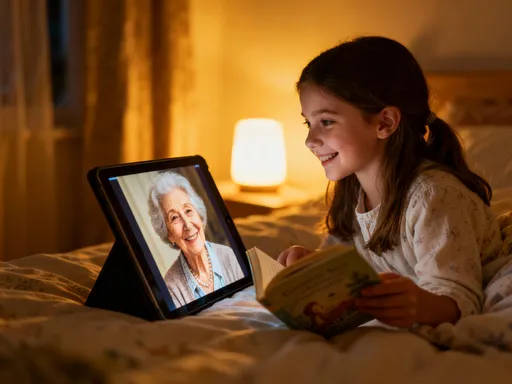
With Grandma, we shifted to recorded moments during the day and live calls on weekends. She started joining us for “Saturday story time,” where my daughter would read a book she’d practiced all week. We’d prop the tablet on the bookshelf, and Grandma would laugh at the same jokes, gasp at the surprises—just like she would if she were in the room. Sometimes she’d hold up her own copy of the book, turning pages with us. It wasn’t the same as being there, but it was close enough to make her feel like part of the ritual.
We also stopped treating every call like an event. If my sister was cooking dinner and I was folding laundry, we’d just start a call and leave it running in the background. The kids would pop in and out, showing off toys or asking random questions. It wasn’t structured, but it was real. We were sharing our lives, not performing them. And over time, those small moments added up to something bigger: a sense of continuity, of belonging, of knowing that even when we weren’t in the same room, we were still part of each other’s days.
Small Tech Tweaks That Made a Big Difference
One of the biggest lessons we learned? Make the tech invisible. The more effort it took to connect, the less likely we were to do it. So we made it stupidly simple. We got a cheap tablet stand and left it on the kitchen counter, with the video app already open and pinned to our family group. All my mom had to do was tap one button, and she was in. We labeled it “Family Window” so she wouldn’t get confused with other apps.
We also started using calendar reminders with gentle notifications—“Time to say good morning to Nana!”—instead of last-minute texts that got lost in the chaos. And we agreed on a “mute when not talking” rule to reduce background noise, which made the calls less stressful for everyone. My daughter learned to wave when she came into the room, and Grandma learned to blow kisses when she saw her on screen. These weren’t high-tech solutions—they were human ones, supported by simple tools.
Lighting made a difference too. We moved the tablet near the window during daytime calls so everyone could actually see each other’s faces. And we started playing soft background music during longer calls—just a gentle playlist—to fill the silence between words. It made the space feel warmer, more like being together in a room than like a formal call. The goal wasn’t to have perfect audio or HD video. It was to make the connection feel natural, effortless, and joyful.
When the Screen Fades: The Moments That Matter Most
Now, when the tablet lights up and Grandma’s face appears, my daughter doesn’t just wave—she runs. “Look what I made!” she shouts, holding up a lopsided clay bird. Or “I learned a new song!” and she starts singing right there. And Grandma? She claps, laughs, asks questions. The screen isn’t a barrier anymore. It’s a doorway.
We’ve celebrated so much through that little window. Birthdays with shared cake (each eating their own, but blowing out candles together). Holidays with matching pajamas and silly hats. Even hard moments—like when our dog passed away—were made easier because we could grieve together, seeing each other’s tears, offering comfort in real time. The screen didn’t fix the distance, but it made it bearable. It turned absence into a kind of presence.
And the best part? The moments when no one is even talking. Just watching my daughter color while Grandma knits, or seeing my nephew build a tower of blocks while we all smile from different continents. Those quiet stretches used to feel like awkward silences. Now they feel like peace. Like we’re just… together. The technology fades, and what’s left is the love, the familiarity, the unspoken understanding that we belong to each other, no matter where we are.
Rebuilding Family Time, One Call at a Time
It wasn’t one grand solution that brought us back together. It was a series of small choices—choosing ease over perfection, presence over performance, consistency over intensity. We stopped chasing the idea of “quality time” and started valuing the quiet, everyday moments that build a family’s story.
Video calls didn’t replace being together. But they became their own kind of togetherness. They gave us a way to stay woven into each other’s lives, even when we couldn’t be in the same room. And for my daughter, they’ve created something priceless: the deep, unshakable knowledge that she is loved, seen, and remembered—across time zones, across years, across any distance.
Now, when bedtime comes, I don’t dread the silence. I open the family chat and say, “Ready for story time?” And within minutes, faces light up on the screen. Grandma adjusts her glasses. Poppy leans in. My sister’s kids whisper, “We’re listening!” And my daughter takes a deep breath and begins: “Once upon a time…”
In that moment, the world feels smaller. The distance doesn’t disappear—but it no longer defines us. Because we’ve learned how to cross it, not with grand gestures, but with small, steady acts of love. And that, more than any technology, is what holds a family together.